Wild n Chill Crafting Recipes Guide
Turn forage and timber into tools, fire, shelter, and lasting camp fixtures.
Recipes in Wild n Chill are less about encyclopedia completion and more about keeping a chill camp alive. Wombat Brawler’s cozy wilderness loop asks you to forage, hunt, fish, trap, and craft until rough shelter feels like home. Steam hosts a Demo in Coldwater Crossing (Demo went live August 6, 2026); the full game is TBA. Use this page as a practical recipe mindset guide tied to Demo essentials and the wider cabin design described on the store page.
If you still need the unlock order, read Tools Progression first. If materials feel scarce, jump to Foraging. New survivors should also bookmark Getting Started.
Recipe categories that matter early
Hand tools and cordage
Knife, rope, and axe recipes are your first production line. Craft them when materials are clean and energy is high — not at midnight after a bear scare. Process fiber and stone near a planned camp so you are not dropping half-finished crafts across three ridges. Internal discipline beats fancy menus: finish the tool that unblocks wood or food before experimenting.
Fire and cook support
Campfire recipes are survival infrastructure. Plan fuel before the spark. Dry wood habits matter as much as the craft itself; the fantasy is off-grid comfort, not a decorative flame. Once fire exists, cook what hunting and foraging bring so Survival Needs stop swinging wildly. Later design mentions smokehouses and food stores — treat those as upcoming cabin-layer goals, not guaranteed Demo checklists.
Shelter and cabin pieces
Survival shelter is the Demo’s clear early build. Get cover up, then improve. Full-game cabin fantasy includes cabins, smokehouses, wood sheds, traps, food stores, hunting hides, and new building styles as you explore deeper. In Coldwater Crossing, prioritize leak-stopping and rest safety over architectural ambition. When you are ready for longer build sessions, Cabin Building walks the vibe from lean-to to lived-in.
Traps and hunting support
Traps and hunting hides belong to the “work smarter” side of the fantasy. Pair them with bow progression and wildlife awareness from Wildlife. A trap line that you never check is just litter. Place with trail logic: between forage patches, water edges, and camp approaches — and always with Bears and Danger in mind.
Materials budgeting
Every recipe spends time as well as mats. Ask three questions before crafting:
- Does this reduce hunger, thirst, or exhaustion risk tonight?
- Does this unlock the next tool rung or a safer rest?
- Can co-op partners use this immediately, or is it solo vanity?
If you answer no three times, park the recipe. Fiber should feed rope before decorative lashings. Good timber should feed shelter frames and firewood before ornamental posts. Stone should feed cutting and chopping tools before trophy piles.
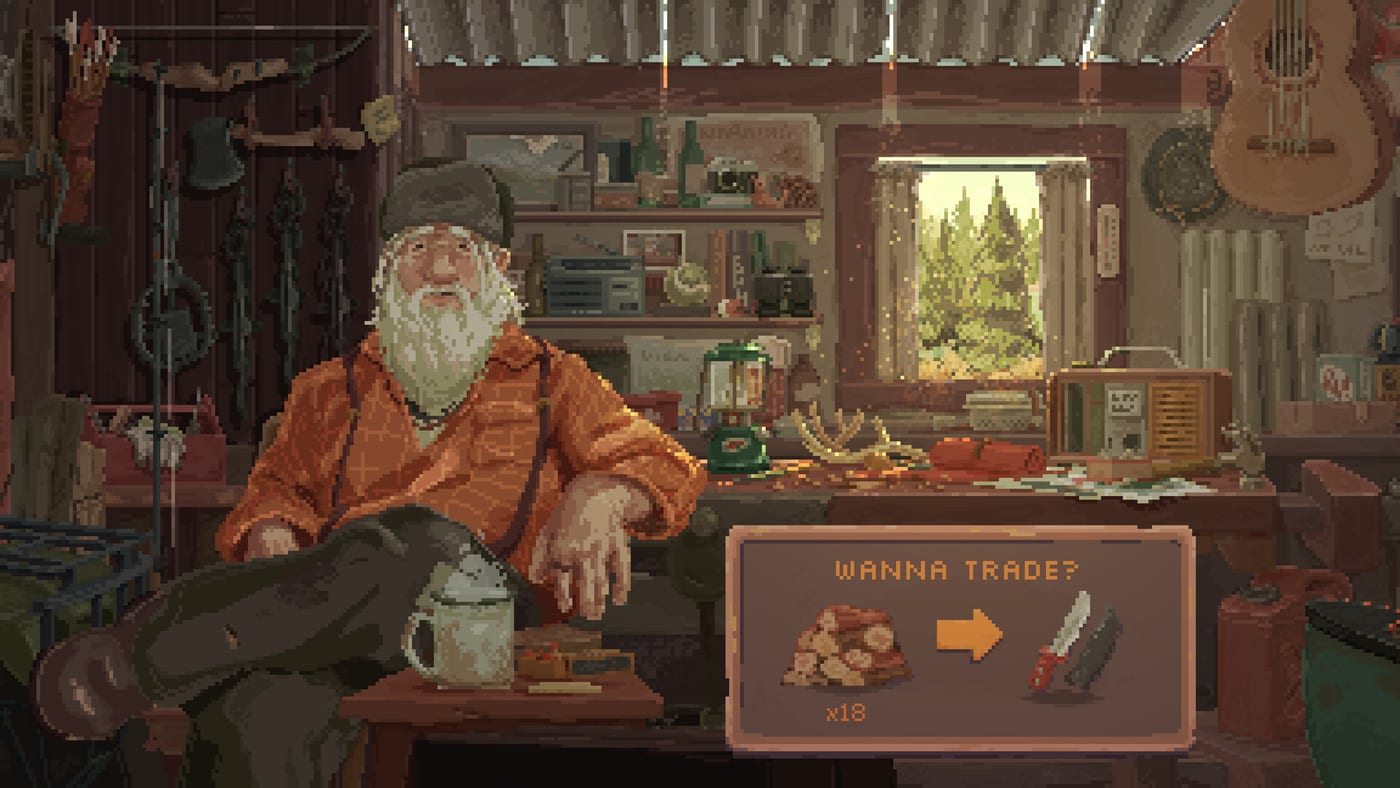
Foraging loops on Foraging keep those budgets honest. Fishing on Fishing can offset hunting pressure when meat recipes outpace your bow skill. Hermit Buck may trade if you bring something worth offering — see Trading with Buck — which sometimes beats grinding a stubborn material node.
Camp layout as a recipe skill
Recipes fail in bad layouts. Put fire where smoke and sparks will not ruin food stores. Keep wood sheds (when available in your build options) between wet ground and the flame. Leave walking room for a dog companion to path without knocking your sense of chill off a cliff — Dog Companion. In co-op, agree on a single “build boss” so four players do not craft four doorframes for one doorway.
Coldwater Crossing orientation helps: use Coldwater Crossing and Regions Overview to decide whether a fixture belongs near water, timber, or trail junctions. Eleven regions are planned for the complete wilderness; recipe variety and building styles are expected to deepen as that map opens. Until then, master a compact Demo camp.
Demo vs full-game recipe expectations
Be precise with language. The Demo teaches crafting simple tools, building a survival shelter, foraging, hunting, and meeting locals. Store copy describes a broader craft fantasy — shelters through smokehouses, wood sheds, traps, food stores, hunting hides, and style discovery. That wider set is the direction of the full game, which remains TBA. This wiki will expand recipe tables as Wombat Brawler shows more; today, prioritize the ladder and camp stability.
Session checklist
- Confirm knife → rope → axe → fire → shelter → bow progress on Tools Progression
- Stock fiber, stone, and dry wood before multi-step crafts
- Cook and store food so needs stay flat
- Place traps only if you will maintain them
- Trade with Buck only when the trade beats a long gather
- Recheck Controls if build placement feels awkward
- Use Tools on the wiki for trackers while you play
Return to the Crafting Hub for navigation, and keep Guides handy when you want story-shaped advice instead of recipe logic. Craft what you will use tonight; let tomorrow’s cabin dreams wait until the firewood is dry.
Frequently Asked Questions
Quick answers to the most common questions.
Which recipes should I prioritize in Coldwater Crossing?
Tools on the bushcraft ladder, campfire, and survival shelter first. Add traps and storage once food and rest are stable.
Are smokehouses and wood sheds in the Demo?
Treat them as part of the wider cabin design for the full game (TBA). The Demo focuses on essentials like simple tools and survival shelter.
How do I avoid wasting materials?
Budget fiber, stone, and timber toward knife, rope, axe, fire, and shelter before cosmetic builds. Foraging and Buck trades can patch gaps.
Where do fishing and hunting fit into recipes?
They feed cook recipes and storage plans. Balance bow hunting with fishing so one food method does not collapse.