Wild n Chill Trapping Guide
Set traps, let camp work while you explore, and keep passive food cozy-safe.
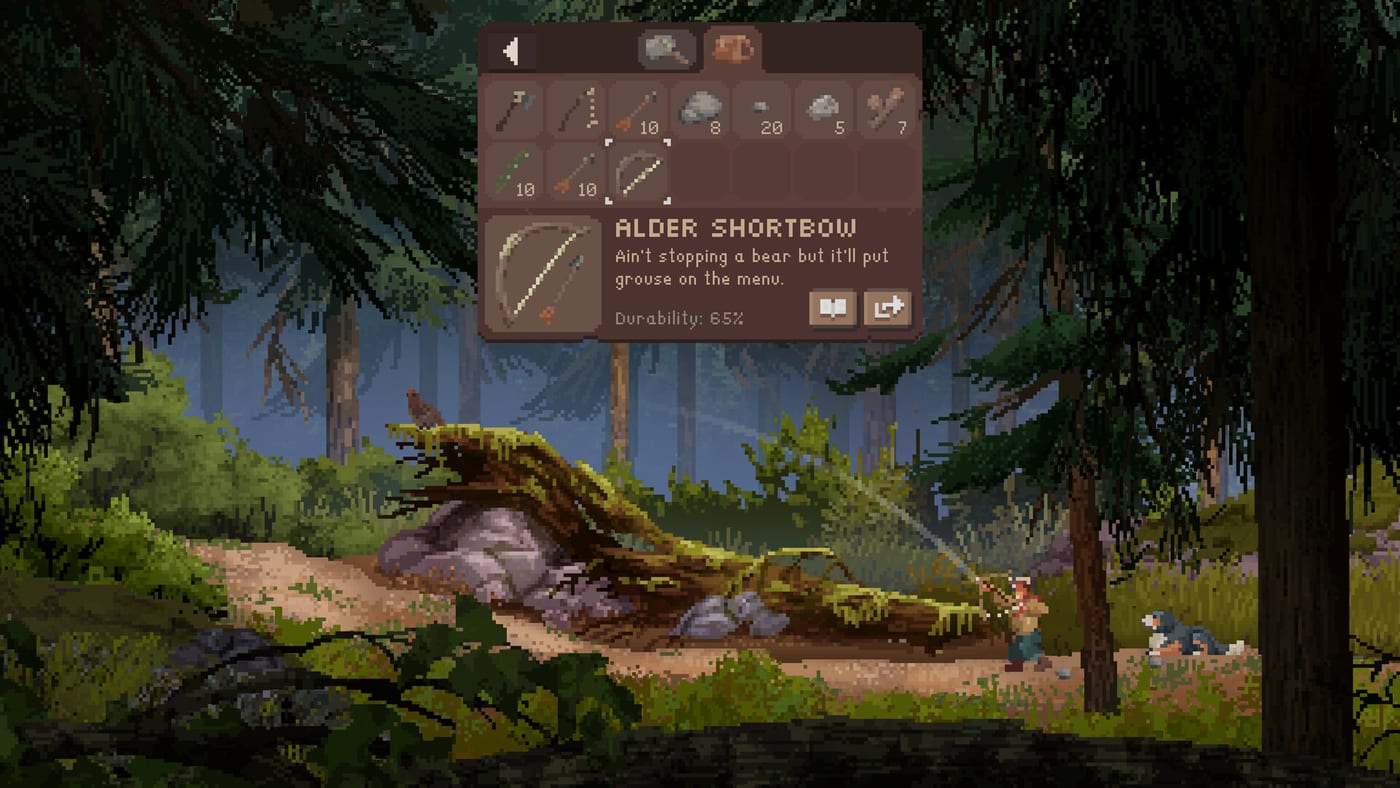
Trapping is Wild n Chill’s quiet multiplier. Active hunts and fishing sessions demand your eyes and stamina; traps let the wilderness contribute calories while you cut wood, raise shelter, or walk a forage loop. Wombat Brawler pitches traps alongside smokehouses, wood sheds, food stores, and hunting hides as part of the cabin dream — from leaky lean-to toward “the finest dang cabin this side o’ Blackbear Hollow.” Steam hosts a Demo in Coldwater Crossing (Demo went live August 6, 2026, App 4628650); the full game is TBA on the main Steam listing (App 3847920). This guide explains how trapping fits Demo essentials, how to keep passive food from becoming passive danger, and how to pair traps with Hunting and Fishing without breaking the chill.
Stabilize needs and first-fire habits via Getting Started and Survival Needs before you scatter snares like decorative camp flair.
What Steam’s pitch promises
Store language frames trapping as camp infrastructure, not a mini-game bolted onto the side. Traps belong beside food stores and processing spaces — places where calories become meals instead of invitations. That matters for safety: a trap line is only cozy when it respects predators, tidy camp rules, and the broader design note about keeping wolves out of camp while bellies stay full.
Coldwater Crossing teaches bushcraft essentials — simple tools, survival shelter, foraging, hunting, meeting hermit Buck — and trapping should be read as part of that same practical curriculum. The eleven-region roadmap and 40+ animal target belong to the full game; Demo trapping is about learning placement, check routines, and pairing passive food with active chores, not completing a continental snare map.
Passive food without passive risk
Traps earn their keep when they shorten the gap between “we need dinner” and “someone can keep building.” They fail when players set-and-forget near sleep spots, leave unprocessed catches scattered, or place lines inside dense bear tunnels without exit plans.
Build habits:
- Place with purpose — near camp margins you check often, not mystery thickets you will avoid at dusk.
- Check on schedule — fold trap checks into morning and evening camp rounds alongside fire and water.
- Process promptly — knife readiness from Tools Progression turns trap yield into meals; raw piles attract trouble.
- Keep scraps managed — align with Bears and Danger and Cabin Building food-store thinking.
- Abort greedy lines — if a route feels wrong, pull focus back to forage margins or a fish bank on Fishing.
Passive food is still wild food. Respect it the way you respect an active hunt carcass.
Demo essentials versus full-game trapping
Speak carefully about scope. The Demo is a Coldwater Crossing slice with teachable loops; the full game remains TBA with deeper building styles and broader wilderness. Traps in Demo play should teach:
- Where camp infrastructure wants to sit relative to water and timber
- How often a two-person co-op team should rotate check duty
- How trapping reduces pressure on bow days without replacing them entirely
Use Demo vs Full and Regions Overview when friends ask whether “the whole map” already supports endgame trap farms. It does not — master the first region’s rhythm instead.
Pairing traps with hunting and fishing
Think of protein as a portfolio:
- Traps — baseline calories while hands are busy crafting or raising frames
- Hunting — high-intent land protein when routes and energy support a stalk — see Hunting
- Fishing — calm bank protein when timber feels loud or bow days need rest
- Foraging — fiber, stone, and snack stability from Foraging
A strong session might open with trap checks, send one co-op player on a short fish set, and reserve the bow for a single clear stalk goal logged in Animals Journal. A weak session tries to run all four at once and returns at half energy with nothing cooked.
Hermit Buck trades can replace a stubborn hunt or a empty trap line — Trading with Buck — but trades land better when your camp already produces steady passive food.
Camp layout and co-op trap duty
Traps reward tidy camps. Cluster processing near fire, keep wood dry, and leave sightlines so black bear approaches are not surprise cinematics through brush. Food stores and smokehouses in the full pitch imply long-term preservation; in Demo play, simulate that discipline with sorted piles: cook now, store next, trade later.
Online co-op supports up to four players, with Shared/Split Screen and Remote Play Together on Steam. Assign a trap captain who owns morning/evening checks so stalkers and anglers are not guessing whether snares were cleared. Rotate the role — trap duty is camp chores, not punishment.
The dog companion’s warnings still matter on check routes; bring retrieves mindset from Dog Companion when a trap yield needs hauling through open ground quickly.
Route planning on Coldwater Crossing
Mark trap lines on mental map spines you already trust from Coldwater Crossing. Prefer edges with landmarks and water access over experimental cuts through dense cover. Pair trap walks with light forage so energy nets positive — Foraging along a known loop beats a dedicated trap sprint that empties stamina.
When marketing mentions Blackbear Hollow as the cabin fantasy horizon, treat trap discipline learned here as portable skill. Regions will change critter tables; tidy food habits travel everywhere.
Session checklist
- Needs stable before placing new lines
- Knife and fire ready to process yields
- Check schedule agreed in co-op
- Scraps and stores managed; bears and wolves stay theoretical
- Balance with an active protein plan — traps supplement, not replace, hunts and casts
- Review Crafting for trap-adjacent builds; Guides for Demo pacing; Controls if placement inputs feel clumsy; Tools for checklist helpers
- Return to Wildlife hub when you want hunting, fishing, or journal depth
Trapping is how patient camps win: calories accrue while you live the cozy fantasy — building, exploring, and coming home to something useful in the pot instead of another emergency sprint.
Frequently Asked Questions
Quick answers to the most common questions.
Are traps in the Coldwater Crossing Demo?
Steam pitches traps as core camp infrastructure alongside food stores and hides. Treat Demo trapping as part of bushcraft essentials — learn placement and check routines in the first region while the full game remains TBA.
Do traps replace hunting or fishing?
No. Traps passively supplement active protein loops. Rotate bow days, bank casts, and trap checks so one failed outing does not empty the cook pot.
How do traps affect camp safety?
Unprocessed yields and messy scraps raise predator pressure. Process promptly, tidy camp, and read Bears and Danger before running check routes through dense cover.
Who checks traps in co-op?
Assign a trap captain for morning and evening rounds while others hunt, fish, or build. Online co-op supports up to four — rotate duty so camp chores stay shared.